+264 81 8211 521
info@safariworldtours.com
Deals & Discounts


A dramatic rocky landmark known for hiking, camping, and sunsets
Spitzkoppe rises from Namibia’s dry plains with sharp granite peaks, huge boulders, and open desert views. Often called the “Matterhorn of Namibia,” it is one of the most recognizable landmarks in the Erongo region.
The area draws travelers who want nature, quiet space, and a strong sense of adventure without going too far off the main route. Hikers can follow short or longer trails, while climbers find steep granite faces and challenging routes. Photographers love the changing colors at sunrise and sunset, when the rocks turn warm against the open sky. This makes Spitzkoppe one of the most striking Namibian Holiday Destinations for road-trip travelers.
The surrounding land is just as memorable, with scattered boulders, rock arches, dry plains, and wide camping areas. Nights here feel open and still, with bright stars above the campsites. It is a good stop for travelers linking the coast, Etosha, Damaraland, or the desert regions.

Gather ideas from our Namibia tour packages, or let our consultants help you picture the possibilities. We can build the journey around your time, style, and interests.
Spitzkoppe sits in Namibia’s Erongo region, between Usakos and Swakopmund. The map makes it easier to see how the area fits into a self-drive trip, especially for travelers moving between the coast, Damaraland, and Etosha. It also helps with planning nearby roads, campsites, short hikes, and overnight stops around the granite peaks.
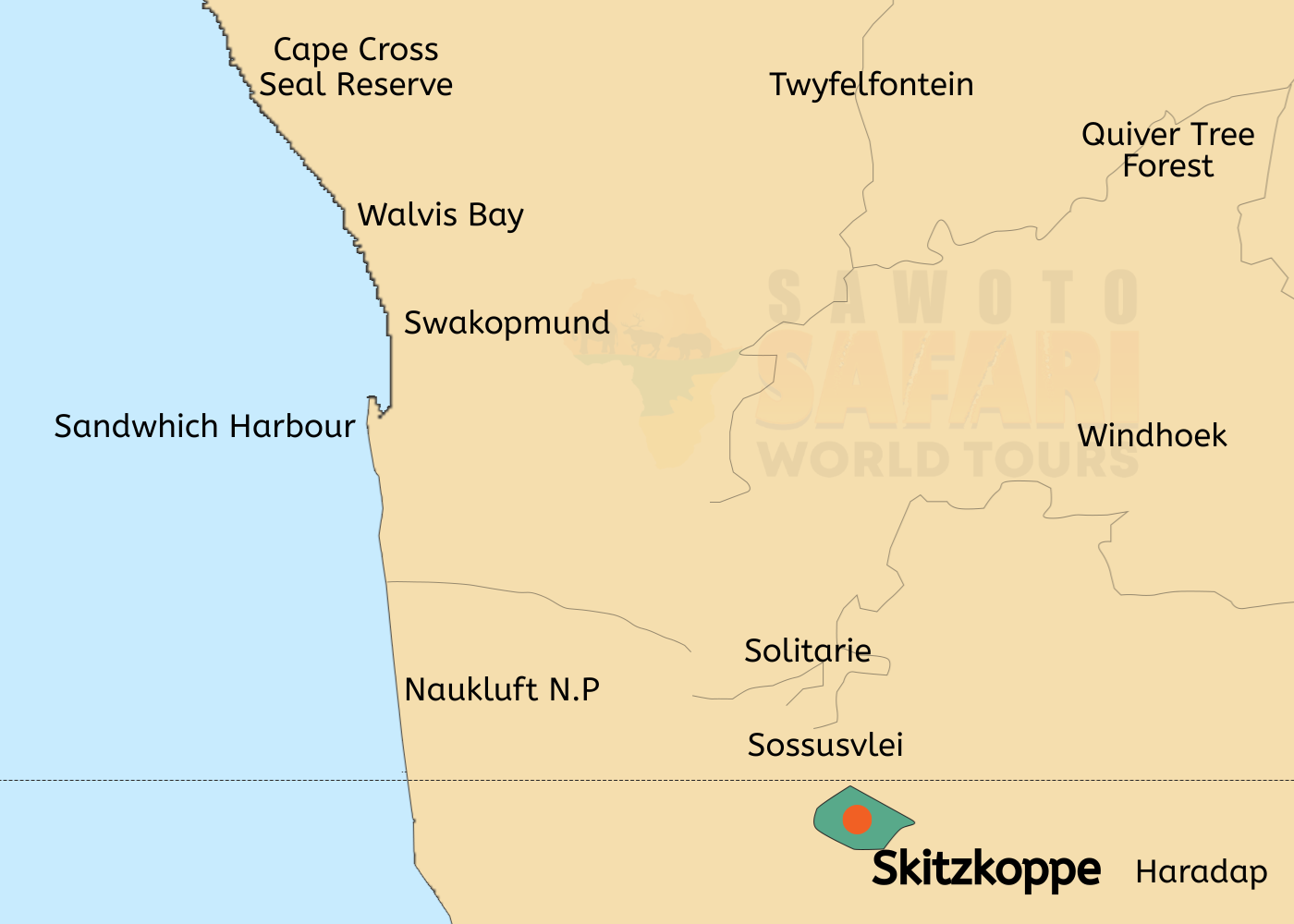
Spitzkoppe sits in Namibia’s Erongo region, between Usakos and Swakopmund, with granite peaks rising from wide dry plains. It is a strong stop for self-drive travelers, campers, hikers, climbers, photographers, and stargazers. The area also carries San rock art, desert quiet, clear night skies, and some of Namibia’s most memorable granite views at sunrise and sunset in clear weather conditions.
Spitzkoppe is easy to add to a Namibia road trip because it sits between major travel routes. Its position between Usakos and Swakopmund works well for travellers coming from Windhoek, the coast, Etosha, or Damaraland during a self-drive journey with simple access too.
Spitzkoppe is located in the Erongo region of central Namibia, between Usakos and Swakopmund. The area feels remote once you arrive, but it is not difficult to reach by road. This balance makes it popular with self-drive travellers who want wild scenery without losing access to main routes nearby and basic services on route during short visits or longer routes.
From Windhoek, the drive is roughly 320 kilometres and usually takes about four hours. The route uses a mix of tarred and gravel roads, so allow extra time. Namibia’s open roads look simple, but photo stops, gravel speed, and changing light can slow the journey in a good way for travellers moving slowly through this quiet region with easy stops.
Swakopmund is around 120 kilometres away, making Spitzkoppe a useful inland stop after the coast. Travellers coming from Etosha should expect a longer journey of about 400 kilometres. That drive can take five to six hours, depending on road conditions, breaks, and the pace of the trip for the day ahead across wide open country and changing desert light.
The roads are generally manageable, though gravel sections still need care. Carry water, fuel, snacks, and a spare tire plan before leaving larger towns. Spitzkoppe works beautifully as an overnight stop, especially for travellers moving between the Atlantic coast, Damaraland, Etosha, and central Namibia’s quiet desert routes in comfort and safety after a long drive under clear night skies.
Spitzkoppe is an old granite landmark, formed over 120 million years ago during the late Jurassic period. Over time, softer rock wore away, leaving steep peaks, rounded boulders, domes, arches, and rough surfaces that now define the area for visitors exploring it closely.
The main granite body formed deep underground before erosion slowly uncovered it. That slow process left the mountain standing above the Erongo plains like a natural marker. The peak looks sudden from the road, especially after long stretches of flat land, gravel, dry grass, and open sky in the afternoon heat. It feels larger up close and clearer.
The main summit rises to about 1,728 meters above sea level. Smaller domes and boulders sit around it, giving the whole area a broken, ancient look. It is not a polished scenery. It feels dry, rough, warm to the touch, and very real beneath your shoes after a short walk. The plain around it makes the height feel stronger, too.
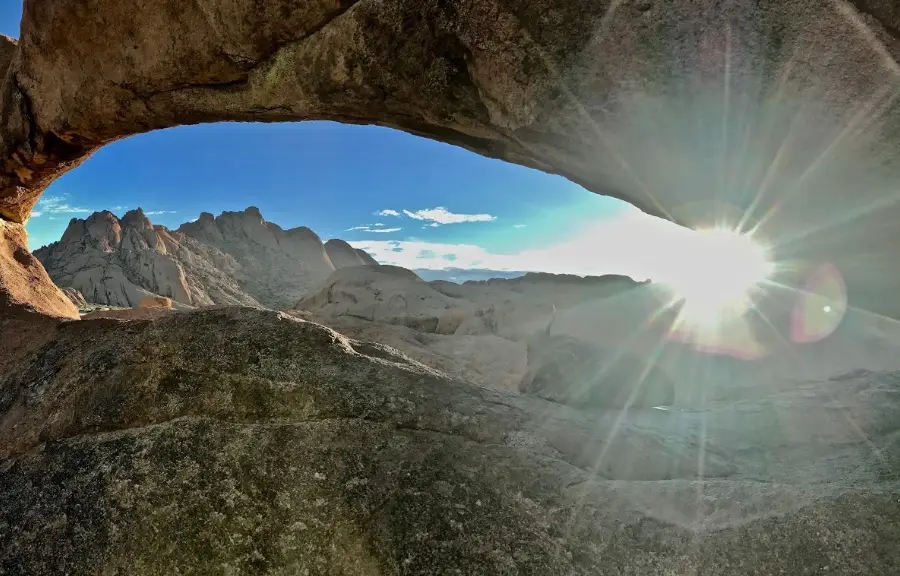
One of the most photographed spots is the natural rock arch. It is reached by a short walk and works especially well at sunrise or sunset. The arch frames the plains beyond it, while the granite turns red, orange, and gold as the light changes across the open land. It is simple to reach, yet it feels oddly special.
Spitzkoppe means “pointed head” in German, a name linked to the mountain’s sharp summit. From a distance, the peak rises cleanly from the plains, easy to recognize and hard to forget once you have seen it from the road. The outline stays clear even in soft evening light before darkness settles.
Spitzkoppe is more than a place for rock views and photographs. The area has deep cultural value, especially through San rock art found around shelters and granite walls. These old paintings show that people have used this landscape for many generations over time.
The San rock paintings at Spitzkoppe are among the most meaningful parts of the visit. Some show animals, people, and symbols painted on protected granite surfaces. They are not just old marks on stone. They are traces of lives, movement, memory, and belief left in a quiet desert place. That quiet feeling is part of the visit for many.
Bushman Paradise is one of the known rock art sites in the area. Visitors usually need a guide to access and understand it properly. A guide can explain the paintings, the setting, and the care needed to keep the site protected from damage caused by careless visits. It also helps visitors understand why respect is important for every visitor.
The paintings should never be touched, scratched, or treated like simple photo props. Even a careless hand can cause damage over time. Standing there quietly, with the granite around you and the open land beyond, makes the place feel personal in a very grounded way, without needing big words. The silence around the shelter adds to that feeling.
For local communities and earlier inhabitants, Spitzkoppe was not only a mountain. It was a place with meaning, shelter, stories, and spiritual value. That side of the destination is easy to miss if you only come for photos, so take your time on the cultural tour and listen to the guide. Small details often say more than large explanations here.
Spitzkoppe is a strong outdoor stop, with hiking, climbing, photography, camping, rock art visits, and stargazing. The area suits different fitness levels, from short walks around the base to tougher routes that need care, time, and good preparation for most active visitors here.
Short walks are enough for many visitors. You can move between boulders, arches, and viewpoints without needing a hard climb. The ground can still be uneven, so proper shoes help. Early morning and late afternoon are better for walking, especially when the heat builds across the exposed granite. Carry water, even if the walk looks short at first.
Climbers come to Spitzkoppe for the granite faces and steeper routes. Some climbs need experience, equipment, and local guidance. This is not a place to test limits carelessly. The rock can be hot, the sun is strong, and help is not always close if something goes wrong. Good planning makes the activity safer and far more enjoyable here.
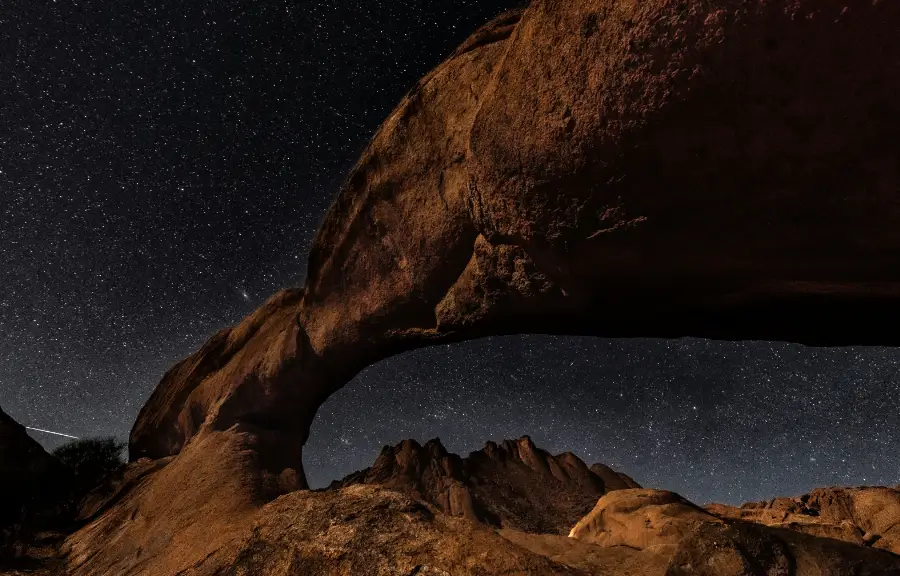
Photographers usually aim for sunrise, sunset, and night skies. The granite changes color in soft light, and the open plains give clear views. After dark, the sky can be full of stars, with the Milky Way often visible when conditions are clear, and the air feels still. A tripod helps if you want cleaner images at night.
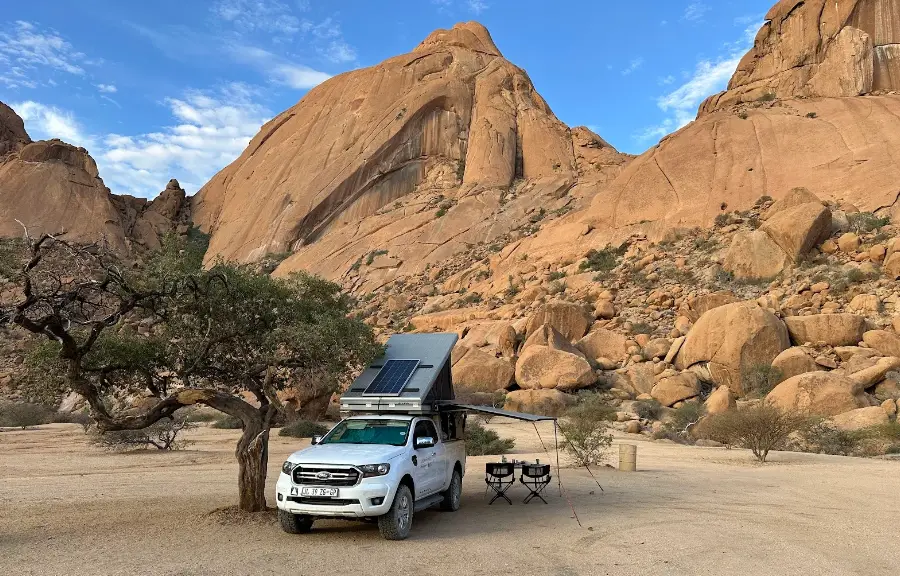
Camping is one of the best ways to experience Spitzkoppe. The nights are quiet, the air cools down, and the peaks sit dark against the sky. Bring enough water, warm clothes, food, and basic supplies, because facilities are simple and the setting is open, dry, and exposed. Campers should not expect luxury, only space and silence nearby, too.
Spitzkoppe gives you dry air, open space, and huge granite rocks rising from the plains. Expect simple walks, warm sunset views, old San rock art, quiet camping areas, and dark skies filled with stars.
These Namibia Safari Itineraries bring together the country’s wide range of travel experiences, from wildlife parks and desert roads to coastal towns, cultural stops, and quiet lodge stays. Some routes are short and focused. Others stretch across several regions. And for travelers comparing Namibia Safari Packages, these itineraries make it easier to choose a trip that fits their time, comfort, and travel style.
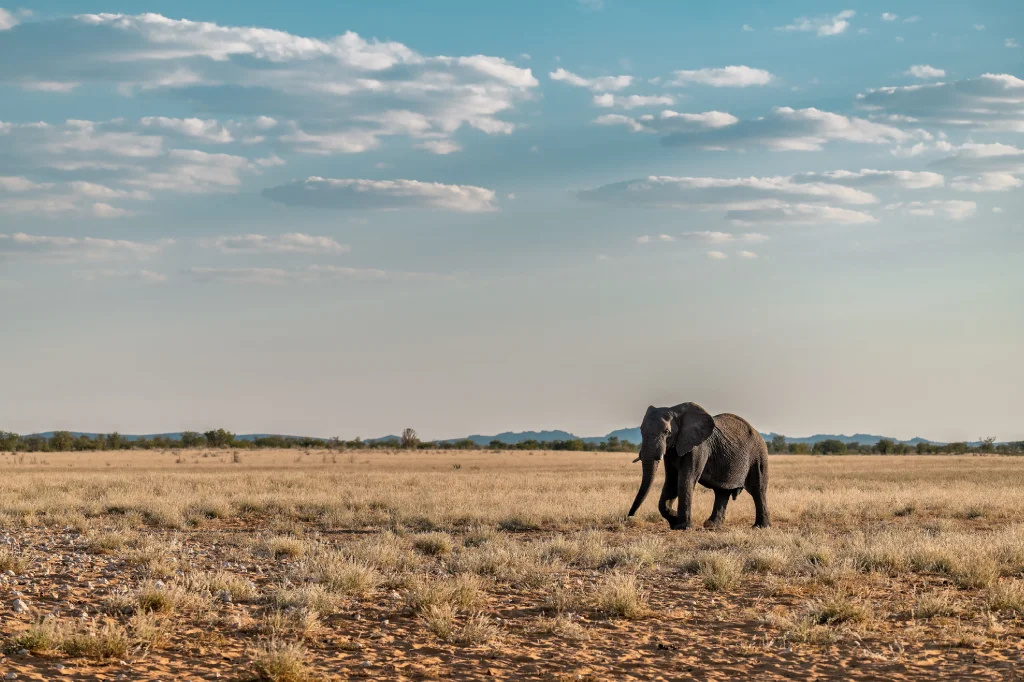
2 Destinations: Etosha National Park → Namibia
View Details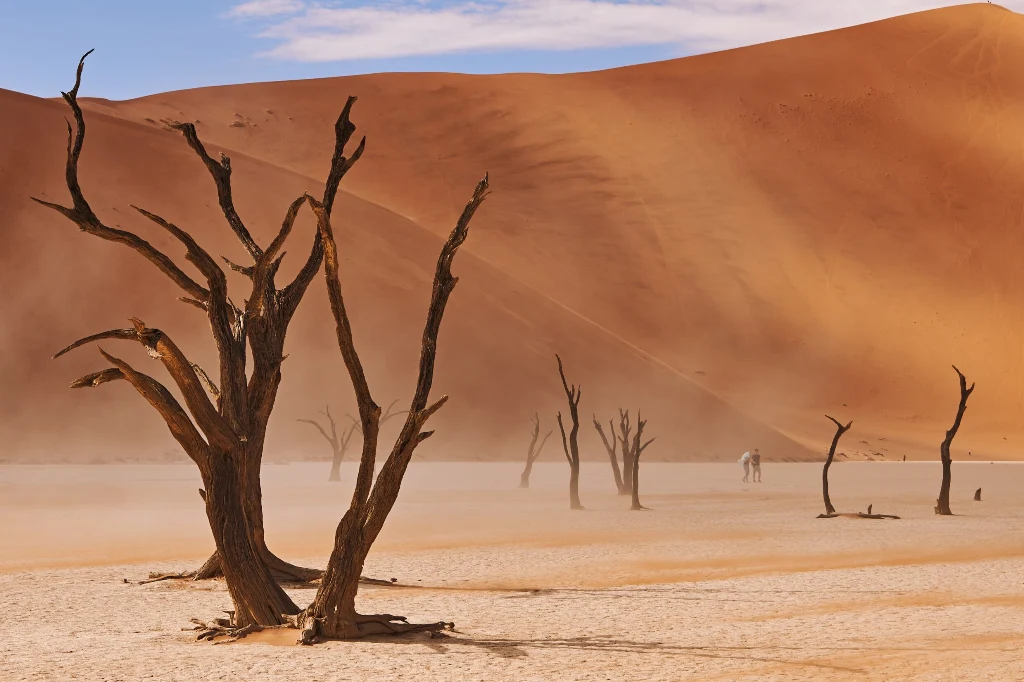
5 Destinations: Botswana → Etosha National Park → Namibia → Sossusvlei → Swakopmund
View Details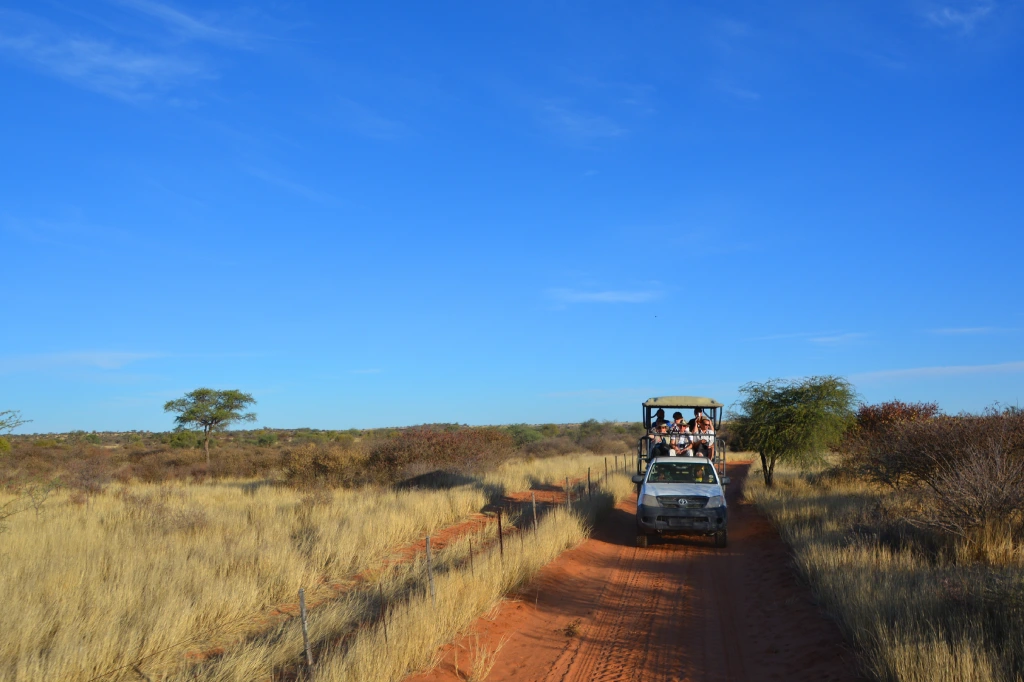
6 Destinations: Etosha National Park → Namibia → Sossusvlei → Spitzkoppe → Swakopmund → Windhoek
View Details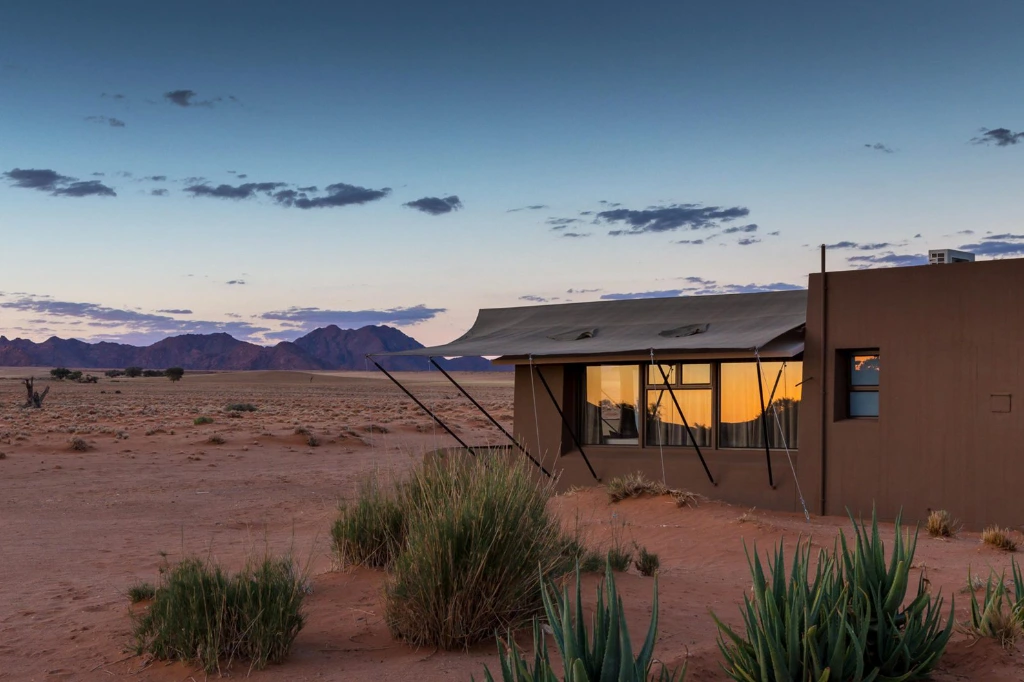
5 Destinations: Etosha National Park → Namibia → Sossusvlei → Swakopmund → Windhoek
View Details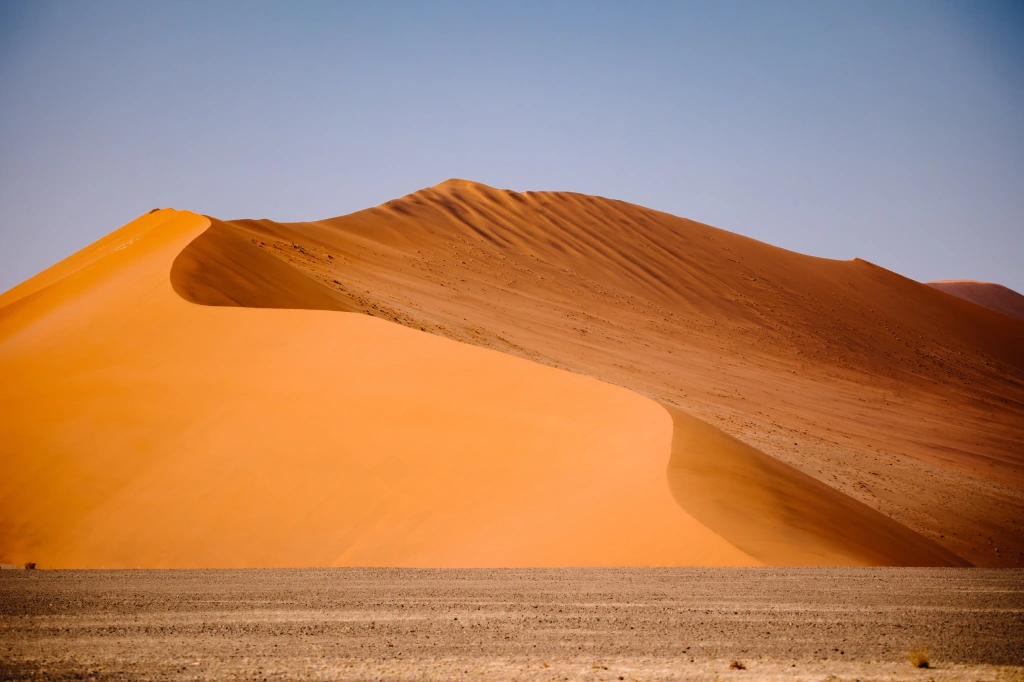
5 Destinations: Etosha National Park → Namibia → Sossusvlei → Swakopmund → Windhoek
View Details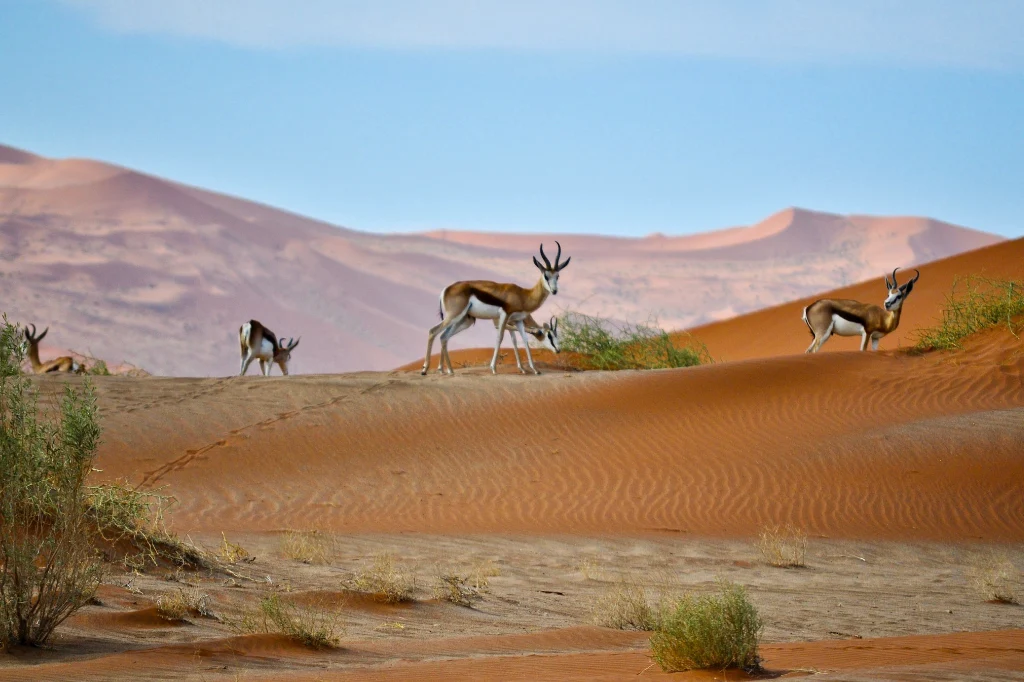
6 Destinations: Botswana → Etosha National Park → Namibia → Sossusvlei → Swakopmund → Zimbabwe
View Details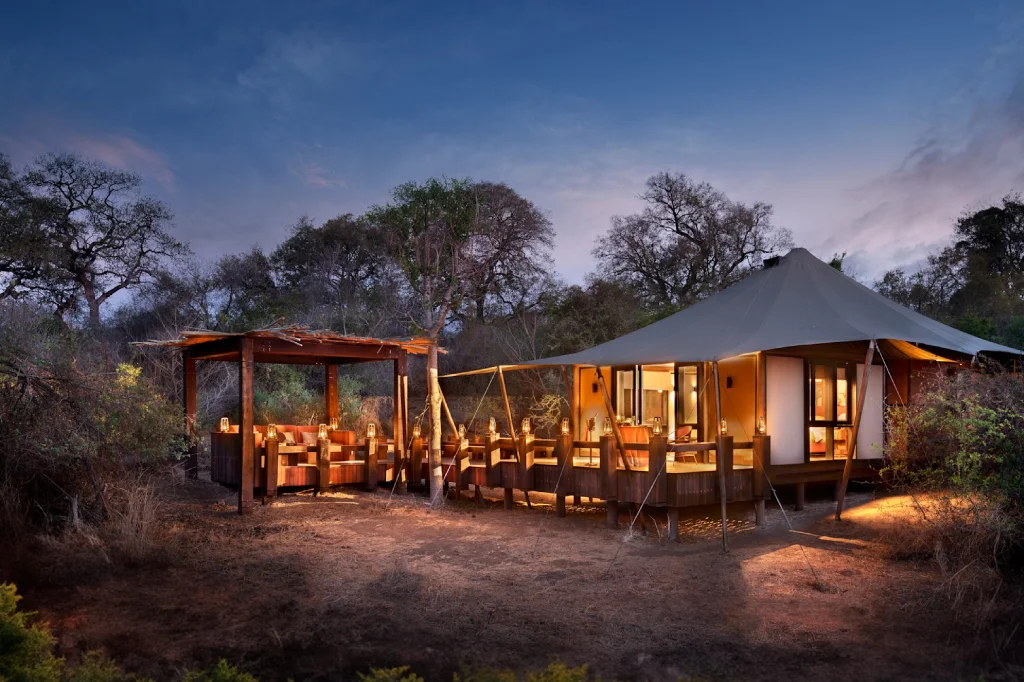
6 Destinations: Etosha National Park → Fish River Canyon → Namibia → Sossusvlei → Swakopmund → Twyfelfontein
View Details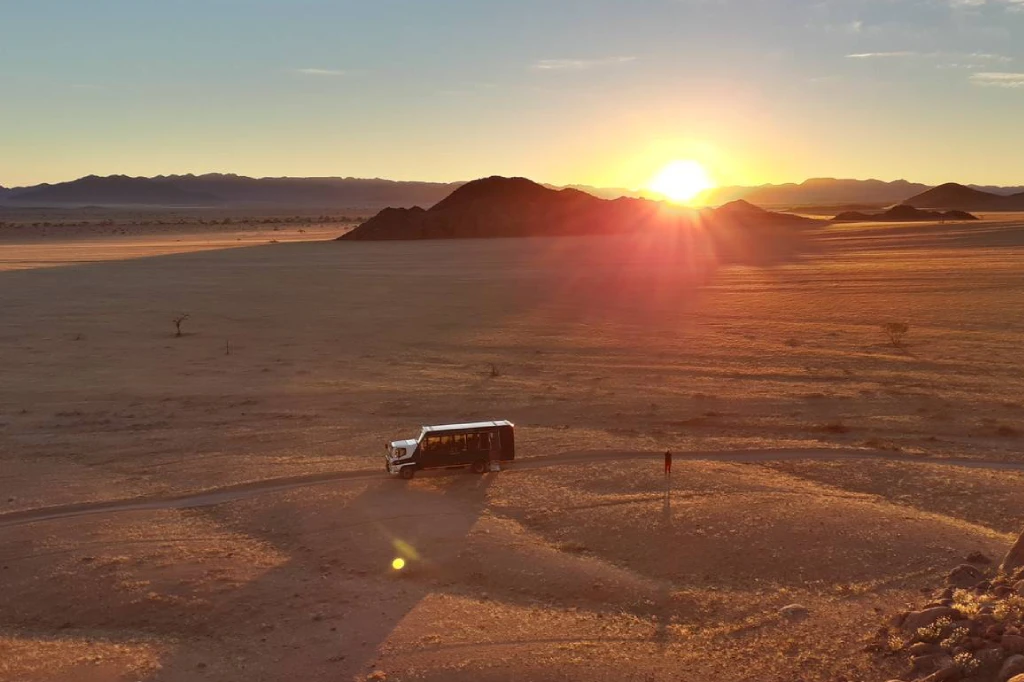
6 Destinations: Botswana → Etosha National Park → Namibia → Sossusvlei → Swakopmund → Zimbabwe
View Details
7 Destinations: Etosha National Park → Kamanjab → Namibia → Spitzkoppe → Swakopmund → Twyfelfontein → Windhoek
View Details
4 Destinations: Etosha National Park → Namibia → Sossusvlei → Swakopmund
View Details
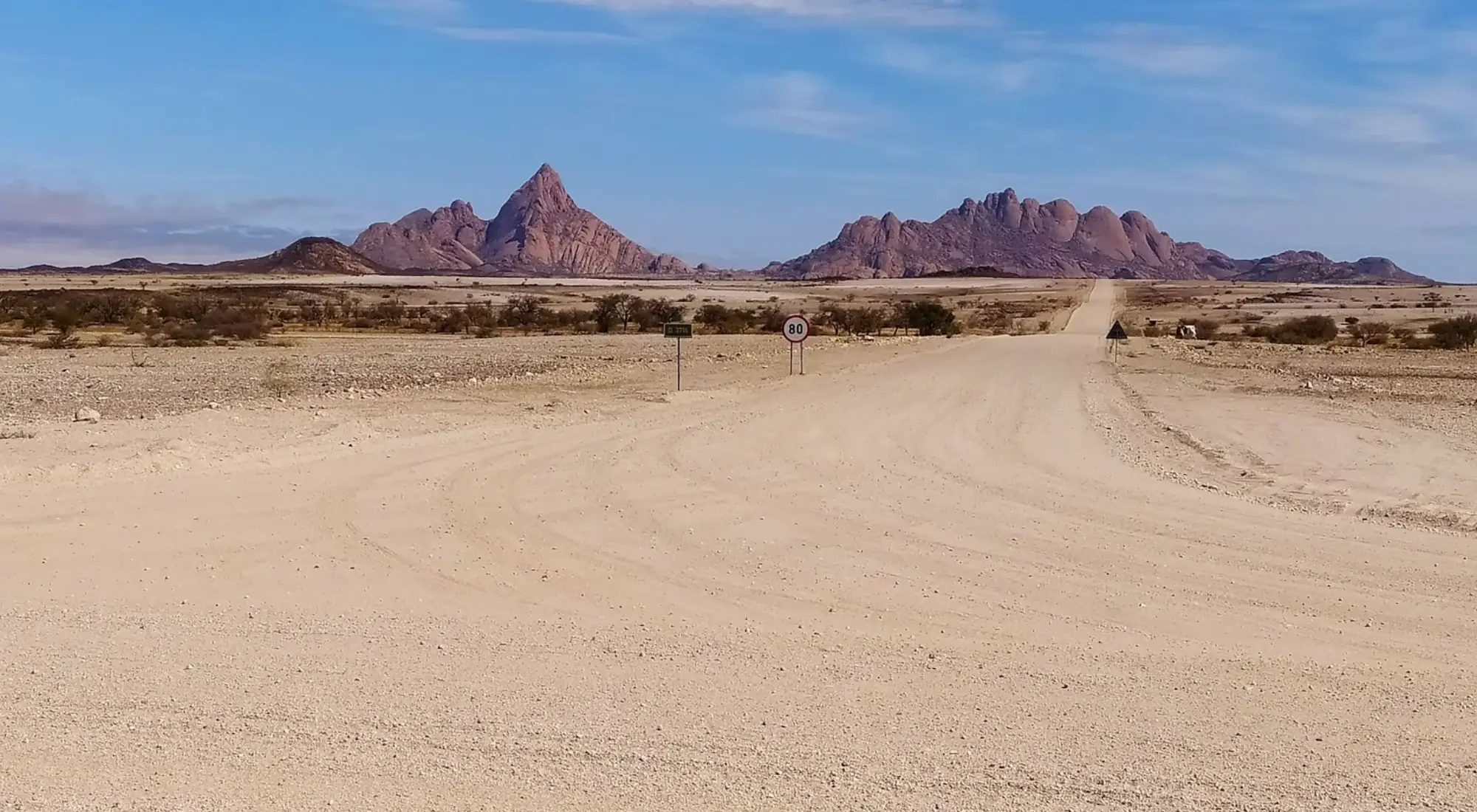
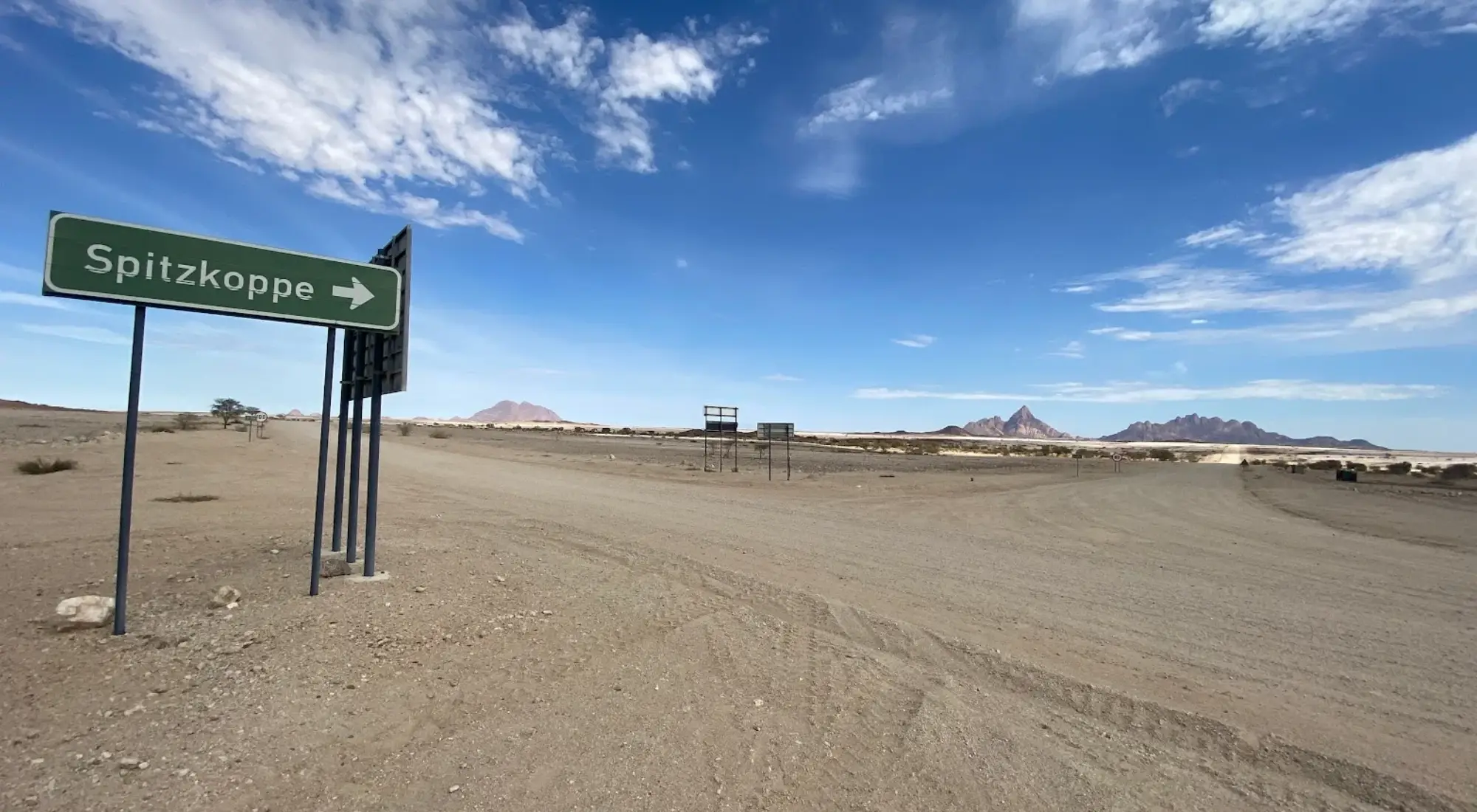
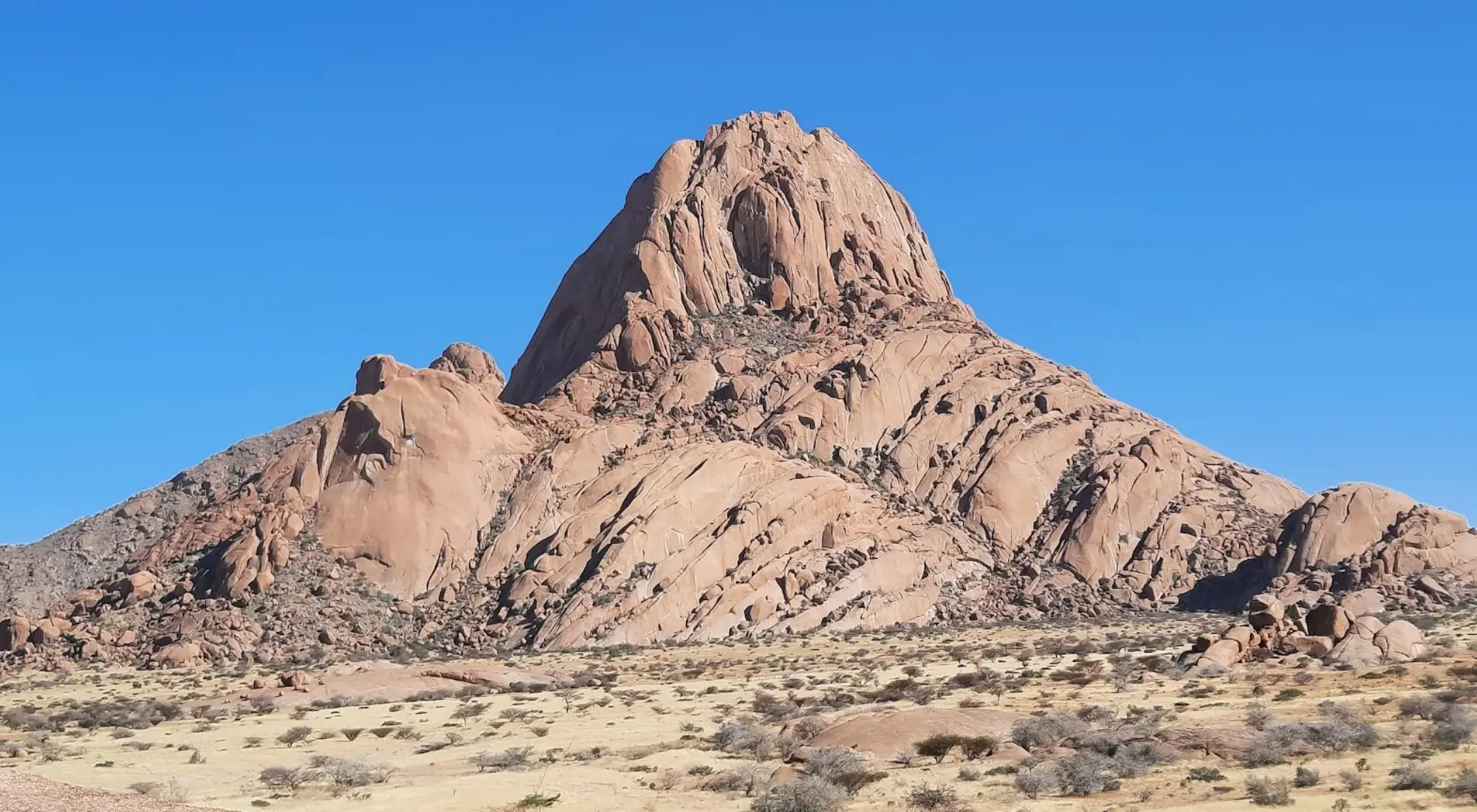
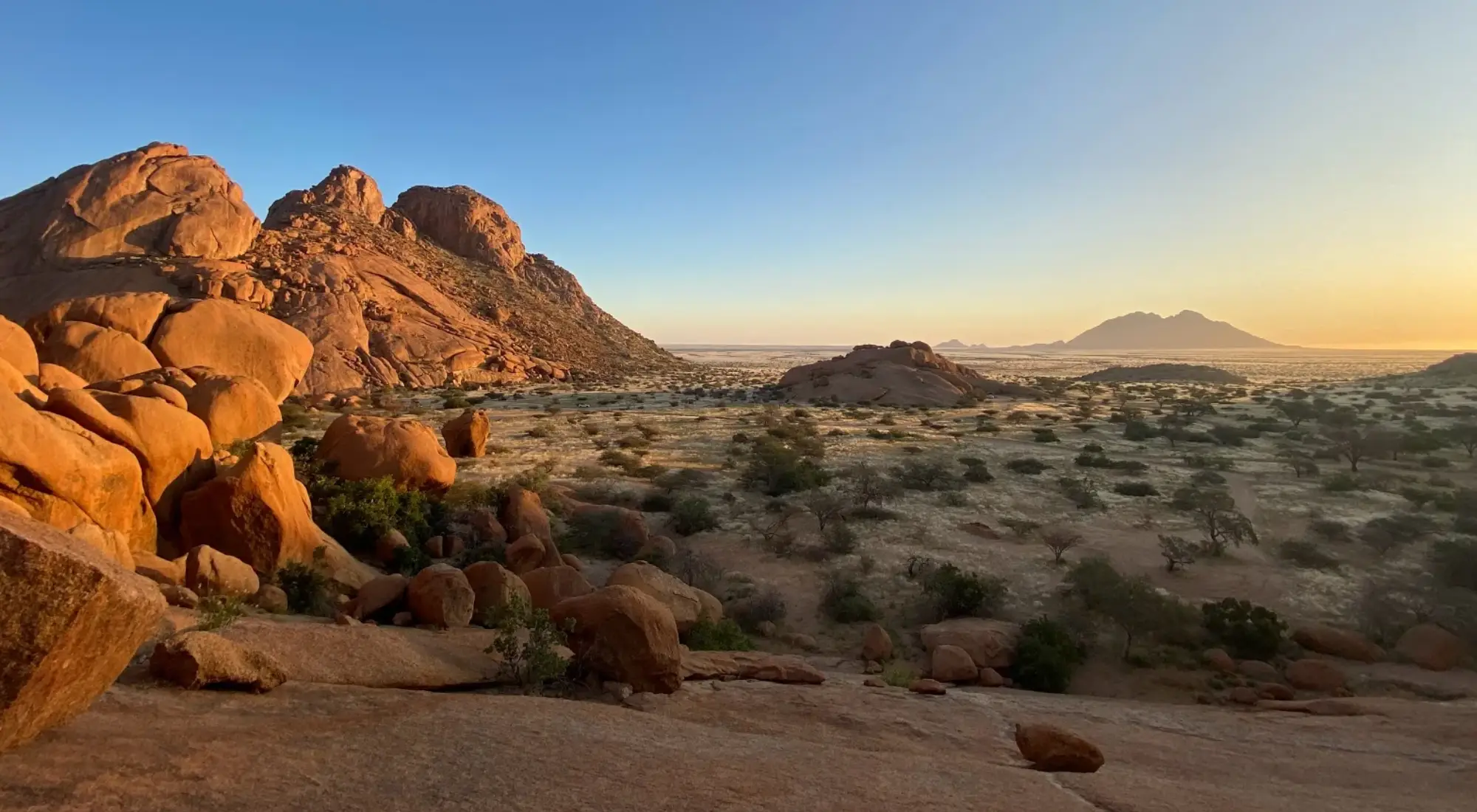
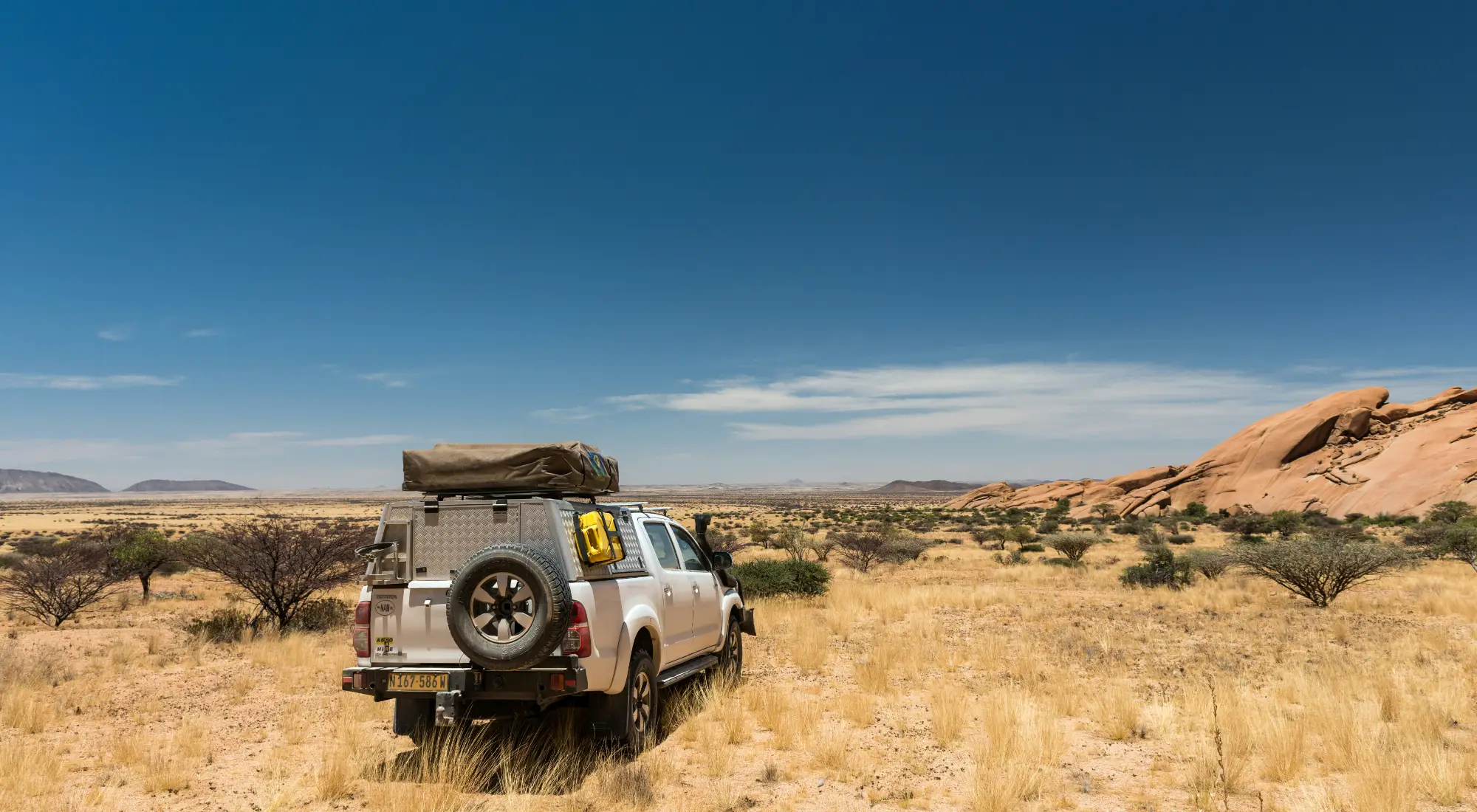
This gallery shows Spitzkoppe’s granite peaks, open plains, rock arches, and quiet campsites. Each image brings out the warm desert light, rough stone textures, and wide skies that make this place memorable.
Spitzkoppe is a place for open space, warm rock, and slow travel. It sits between Usakos and Swakopmund and draws visitors for hiking, camping, climbing, San rock art, photography, and clear night skies. These FAQs cover the main things to know before visiting, from access and history to wildlife, activities, and road planning.
Namibia has a lot to pull travelers in. Wide desert dunes, wildlife parks, salt pans, coastal towns, canyons, and quiet wilderness areas all sit within one country. This section brings the main attractions in Namibia together, so travelers can see what fits their route, time, comfort level, and the kind of journey they want.
Our Namibian tour was an unforgettable experience from start to finish. Henzel was both our guide and driver, and he did an outstanding job in both roles. He was incredibly thorough and well-prepared, always sharing detailed insights about the landscapes, wildlife, and local culture. You could tell he truly knew and loved the country.

We did the “7 Days Wildlife Etosha and Sossusvlei Namibian Safari (Accommodated)” with Safari World Tours in December 2023 and it was the best choice for our family! We are experienced travelers (49 countries visited) and found that to travel to Namibia with a small child (4 years old) a tour would the the best option







 English
  German