

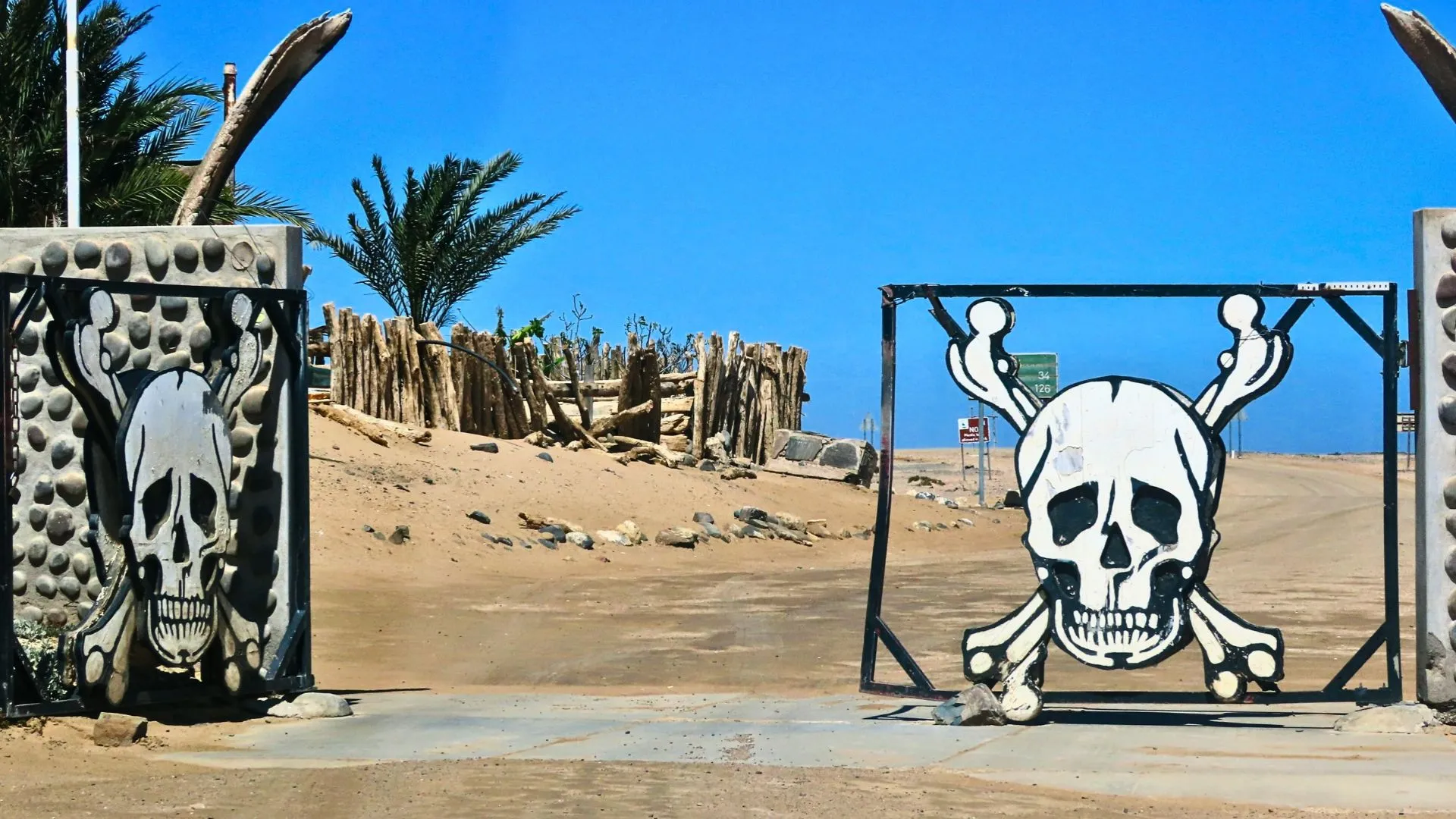
Namibia’s Skelettküste got its grim name from the bones and wrecks scattered along its shore. Whale and seal bones lie on the sand, and the rusting remains of ships sit where the fog trapped them. The coast is wild and remote, with cold Atlantic water on one side and desert on the other. A sailor who made it to the beach had little reason to feel relieved, because there was almost no fresh water inland.
Today, travellers come for the maritime history, the unusual wildlife and the huge, quiet landscapes. The name is dramatic, but it points to something real: this is a place where the ocean and the desert meet, and neither is forgiving.
Why is Namibia’s Skeleton Coast called the Land of the Skeletons?
The coast is named for the whale and seal bones and the skeletal wrecks of ships along Namibia’s Atlantic shore. Thick fog, rough surfing and hidden hazards caused many shipwrecks. Anyone who reached land found a dry, isolated desert where survival was hard.
Skeleton Coast at a Glance
| Detail | What to know |
| Standort | Atlantic coast of northwestern Namibia |
| Protected area | Skeleton Coast National Park, from the Ugab River to the Kunene River |
| Landscape | Beaches, dunes, gravel plains and dry riverbeds |
| Main draws | Maritime history, photography and desert wildlife |
| Good to know | Some famous coastal stops lie outside the national park |
Why Is It Called the Land of the Skeletons?
The name comes from two kinds of remains. The animal bones speak to the rich marine life here and to the area’s whaling past. The rusting hulls and broken timbers belong to ships that never finished their journeys.

That said, don’t picture a beach covered in bones and wrecks. Most of the coasts are open sand, stone and sea. Some wrecks have broken apart, sunk under the sand or become hard to recognise. Knowing this helps you enjoy the coast for what it is, instead of waiting for a ship around every bend.
History Behind the Skeleton Coast
The story of this coast includes early European Exploration, sea trade and fishing. Portuguese explorers sailed along Namibia’s coast in the late fifteenth century, long before modern navigation made sea travel more predictable.
One of the best-known wrecks is Eduard Bohlen, which ran around Conception Bay in 1909 in thick fog. It remains now sitting inland, away from the water’s edge. The wreck lies south of Skeleton Coast National Park, so you’ll need a separate specialist excursion or a scenic flight to see it. Not every wreck has the same cause. Weather and poor navigation played a big part, but engine trouble, fires and towing accidents sank ships here too.
What Made the Skeleton Coast So Dangerous?
Discover why Namibia’s Skeleton Coast became one of the world’s most dangerous coastlines. Explore how thick coastal fog, rough Atlantic seas, hidden reefs, strong currents and the harsh Namib Desert created deadly conditions for sailors and shipwreck survivors.
Thick Coastal Fog
The cold Benguela Current is behind the fog. Moist air cools as it passes over the chilly Atlantic, and the fog that forms drifts inland. For sailors with no modern equipment, it was hard to judge distance or spot danger ahead.
Rough Seas and Hidden Hazards
Heavy surfing, strong currents, rocky reefs and sandbanks made things worse. A ship close to shore could face several of these at once, with almost no room to fix a mistake.
A Harsh Desert Behind the Beach
Surviving a wreck didn’t mean you were safe. Stranded sailors found very little drinking water, open beaches with no shelter and a long way to any help. The coastal desert could be just as unforgiving as the sea.
What Can You See Along the Skeleton Coast?
Explore the highlights of Namibia’s Skeleton Coast, from historic shipwrecks and the Cape Cross seal colony to remote beaches, dramatic desert landscapes and the wildlife-rich Hoanib River area. Discover the unique sights and experiences that make this coastline unforgettable.
Shipwrecks
The wrecks give you a real link to the past. Zeila, south of Henties Bay, is easier to reach than the more remote wrecks. Before you go, ask which sites your route actually includes. Photos of famous ships can make them look easier to get to than they are.
Cape Cross Robbenkolonie
Cape Cross Seal Reserve lies south of the national park and is known for its large colony of Cape fur seals. There’s always something to watch, from seals sliding between shore and surfing to the noisy squabbles on the rocks. Stay in the marked visitor areas and give the animals plenty of space.
Empty Beaches and Desert Views
For many people, the best part is simply watching the landscape change. Fog softens the shoreline, then lifts to reveal dunes and waves. Leave time for quiet stops instead of racing from one attraction to the next.
The Hoanib River Area
The dry riverbeds of the Hoanib are a good place to look for deserted animals. Access depends on your camp, your route and your arrangements. It feels very different from driving on the public coastal road.
What Wildlife Can You Find?
Cape fur seals, jackals, brown hyenas and seabirds all live along the coast. Oryx and springbok turn up in suitable desert habitat. In the wider river valleys and nearby wilderness, you may also see deserted elephants, giraffes and lions.
A few things are worth knowing. Flamingos prefer suitable coastal wetlands, not every beach. And don’t expect elephants beside the wrecks. Sightings depend on habitat, water and how animals move, and a wildlife excursion into the river valleys is a very different outing from a coastal sightseeing drive.
What Is the Best Time to Visit the Skeleton Coast?
The right time depends partly on the rest of your Namibia trip. Fog and cool sea breezes can show up at any time of year, even when inland areas are hot.
| Wann | What to expect |
| Mai bis August | Cooler on the coast, so pack warm layers |
| September to October | Inland temperatures climb, coastal weather stays changeable |
| November to March | Warmer inland, with possible seasonal rain away from the coast |
| April | A transition month, so check conditions along your whole route |
Pick your dates around what you most want to see and ask about local conditions before you book. No month can promise clear skies, dramatic fog or any particular sighting.
What Should You Know Before You Go?
Check the current parking entry rules, gate hours and overnight arrangements before you leave. The northern wilderness areas need specialist access, so don’t treat them as an add-on to a self-drive trip.
Plan your fuel stops, carry plenty of drinking water and make sure your vehicle suits your route. Pack warm clothes, binoculars and something to protect your camera from sand and moisture. Stay on authorised roads, because tyre tracks can damage the fragile desert surface. And leave bones and wreck fragments exactly where you find them.
Explore the Skeleton Coast with Safari World Tours
A Skeleton Coast Safarifits nicely into a longer trip through Damaraland, Etosha National Park and Sossusvlei. Safari Weltreisen' Namibia Desert Safari Itinerary already includes coastal scenery and shipwreck stops. Get in touch with the team to talk through current guided options, places to stay and a route that matches your interests.
A Coast with a Story to Tell
So why is Namibias Skelettküste called the Land of the Skeletons? The bones and wrecked ships explain the name, and the fog, rough water and desert isolation explain the reputation. But a visit gives you more than stories of loss. You’ll find seals on the shore, animals that thrive in dry river valleys and landscapes that shift with the light. Give the region time, respect the distances and choose the places that interest you most. Safari World Tours can help you decide how the coast fits into your Namibia journey.
Related Itinerary
3 Days Etosha Wildlife Safari (Camping)
2 Destinations: Etosha National Park → Namibia
View Details
14 Days Tour to Great Safari in Namibia, Botswana & Victoria Falls Tour (Camping)
5 Destinations: Botswana → Etosha National Park → Namibia → Sossusvlei → Swakopmund
View Details
14 Days Tour to Wonderful Safari in Namibia, Botswana & Victoria Falls Tour (Accommodated)
6 Destinations: Etosha National Park → Namibia → Sossusvlei → Spitzkoppe → Swakopmund → Windhoek
View Details
17 Days Tour to Namibia, Botswana & Victoria Falls Tour (Camping and Lodging)
5 Destinations: Etosha National Park → Namibia → Sossusvlei → Swakopmund → Windhoek
View Details
16 Days Tour to Marvelous Safari in Namibia, Botswana and Victoria Falls (Lodging & Camping)
5 Destinations: Etosha National Park → Namibia → Sossusvlei → Swakopmund → Windhoek
View Details
18 Days Adventure Safari in Namibia, Botswana and Vic Falls (Lodging)
6 Destinations: Botswana → Etosha National Park → Namibia → Sossusvlei → Swakopmund → Zimbabwe
View Details
24 Days Tour Southern African Safari – 4 Countries (Camping)
6 Destinations: Etosha National Park → Fish River Canyon → Namibia → Sossusvlei → Swakopmund → Twyfelfontein
View Details
12 Days Tour to Namibia, Botswana & Zimbabwe – Vic Falls Safari (Camping)
6 Destinations: Botswana → Etosha National Park → Namibia → Sossusvlei → Swakopmund → Zimbabwe
View Details
17 Days Trail Safari in Namibia, Botswana and Vic Falls (Lodging & Camping)
7 Destinations: Etosha National Park → Kamanjab → Namibia → Spitzkoppe → Swakopmund → Twyfelfontein → Windhoek
View Details
12 Days Trail Safari in Namibia, Botswana and Vic Falls (Lodging)
4 Destinations: Etosha National Park → Namibia → Sossusvlei → Swakopmund
View Details
 German
 English