

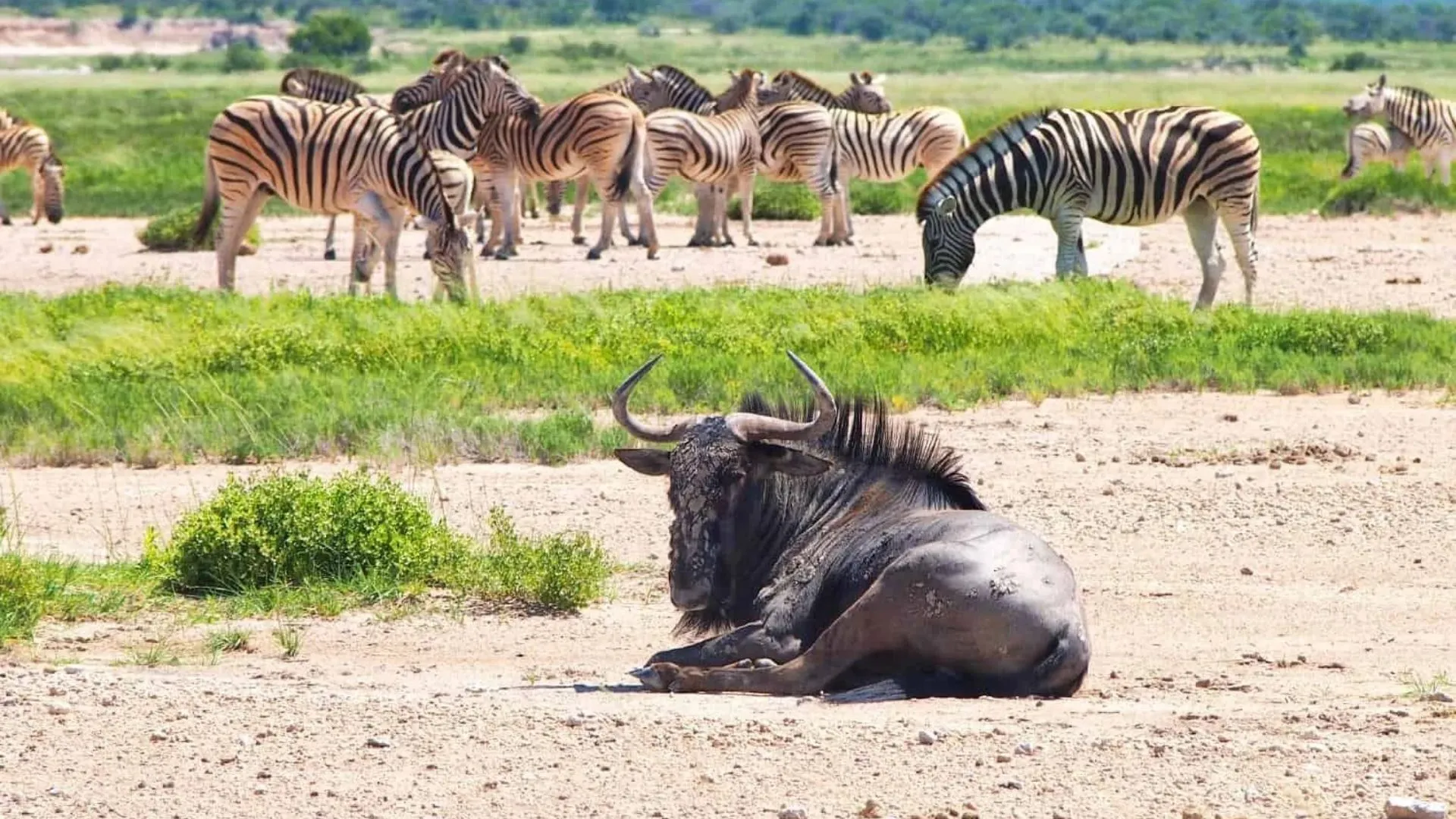
A typical day in Etosha Nationalpark includes morning game drives, waterhole visits, a midday break and afternoon wildlife viewing. Evenings bring dinner, relaxation and, at selected camps, the chance to watch animals at floodlit water holes. Your Etosha National Park Safari will depend on the season, where you stay and whether you explore independently or with a guide.
Some mornings you’ll hop between several waterholes. Other times you’ll simply sit and wait for animals to wander over. In the quiet moments, there’s still plenty to see, from open plains to birds and small creatures beside the road. An unhurried plan helps you enjoy all of it. Sort out your meals, breaks and then drive back, then leave a little room for surprise stops and quiet watching.
What Does a Typical Day in Etosha National Park Look Like?
An Etosha Safari day usually begins with an early drive and a few waterholes stops. Lunch and a rest often follow, then you explore again in the afternoon. You’ll need to be back before the park closes for the day. At some camps, you can keep watching wildlife in the evening from the waterhole viewing area. Routes and sightings shift with the seasons.
| Planning Factor | What to Expect |
| Main activities | Game drives and waterhole viewing |
| Daily pace | Slow driving, wildlife stops and breaks |
| Starting time | Depends on seasonal opening times and tour arrangements |
| Unterkunft | Camps inside the park or lodges outside |
| Safari style | Guided or self-drive |
| Evening experience | Dinner and waterhole viewing at selected camps |
| Useful items | Drinking water, layers, sun protection, binoculars and a camera |
How Does an Etosha Safari Day Begin?
The morning starts with a quick check of your kit. Fill your water bottle, make sure your camera battery is charged and keep yourbinoculars close. Pack something warm, because mornings can be chilly, particularly in an open safari vehicle. Breakfast depends on your plan. You might eat before you leave, take a packed breakfast, or come back to camping after your drive. Settle this the night before so the morning runs smoothly.

Your accommodation also affects your start. A lodge outside the park adds travel time to the gate, so ask which entrance you’ll use and how far it is. Gate times change with sunrise and sunset, so look at the posted hours when you arrive. An early start in one month won’t be the same time in another.
What Happens on a Morning Game Drive?
A Morgendliche Pirschfahrt mixes slow cruising with regular stops. You scan the open ground, look under the trees and keep an eye out for anything moving near the road. Sometimes there’s an animal just around the corner. Sometimes the road is quiet for a good while. Water holes give your drive a purpose. Instead of driving straight past, take your time and watch what unfolds. Animals may come in carefully, stop and look around, or hold back while others drink first.
Waterholes are especially important in dry conditions, when water is hard to find and wildlife gathers around it. Still, no two waterholes are quite the same, and what you see changes through the year. You might spot zebras crowding the water’s edge, or giraffes hesitating before they bend down to drink. It’s easy to miss these small scenes when you’re rushing.
If you have a guide, they can name the animals you see and explain what they’re up to. Ask as many questions as you like but save some time to just look. No route or start time can promise a particular sighting.
A Sample Daily Schedule
This is only a guide to help you plan. Your operator will confirm the real arrangements for your trip.
| Part of the Day | Typical Activity | What to Check |
| Early morning | Prepare and leave when access is permitted | Departure time, warm layers and breakfast |
| Morning | Game drive with waterhole stops | Planned route and comfort stop |
| Late morning | Continue exploring or return towards camp | Distance remaining and lunch arrangements |
| Midday | Lunch, rest or a planned stop during a longer drive | Available facilities and drinking water |
| Afternoon | Explore another route or revisit waterholes | Road conditions and return time |
| Evening | Dinner, relaxation and possible camp waterhole viewing | Camp facilities and activity arrangements |
Days spent moving from one camp to the next feel different from days based in one place. Ask how much time your itinerary gives you for wildlife stops between overnight stays.
What Do Travellers Do Around Mid-day?
Some people return to camp for lunch and a rest. Others stay out on a longer route, with meal and toilet stops worked out in advance. Talk through the choices before you go, especially if you’re travelling with children. A break gives everyone a chance to stretch, have a drink and get out of the vehicle. It’s also a good moment to look back over your photos and get ready for the afternoon.
Find out what your camp really has, since you can’t count on a restaurant, shop or pool at every stop. Mid-day isn’t always the best time to see animals. If you stay out, stay flexible in case something turns up, but keep meals and comfort in mind. Only get out of your vehicle at places where the park rules allow it and plan your breaks around approved stopping points.
What Is an Afternoon Game Drive Like?
The afternoon gives you a fresh start without just repeating the morning. You could try a different waterhole or go back to one that was quiet earlier on. Choose a route that matches the time you’ve got. A short loop with a few relaxed stops can be more enjoyable than a long drive that leaves no time to watch.
Before you leave, check the latest road information and think about how long the trip back will take. Leave extra time for slow driving, animals on the road and the odd unplanned stop.
If you’re staying outside the park, count the drive to the exit gate as part of your return. If you’re staying inside, follow your camp’s rules about getting back. In both cases, start heading back early.
Does the Day Change with the Season?
Yes, though mostly in where you spend your time. The overall shape of the day stays the same. In the dry season, waterholes take centre stage as animals crowd around what water is left. You may stop less often and stay longer at each place. A calm waterhole can turn lively quickly as new animals arrive.
After rain, water is easier to come by, so animals spread out over a larger area. You might do more searching between sightings, rather than focusing on water holes. Pack for the weather and keep your expectations loose. A route that was great for another traveller might give you something quite different.
What Happens After Game Drives?
Back at camp, things slow down. Have dinner, charge your camera and sort out what you need for tomorrow. After hours outdoors, a quiet evening is often just what you want. At some camps, Wildlife Viewing carries on after dark. The floodlit waterhole at Okaukuejo lets guests watch animals both day and night. Namibia Wildlife Resorts says elephants, lions and black rhinos are among the animals seen there, though there are never any guarantees.
Find a spot in the viewing area and be patient. There can be a long lull before anything arrives. Evening viewing doesn’t mean you can drive around the park by yourself after dark. Ask about your accommodation about approved evening activities and confirm the details ahead of time.
Make Time Enjoy the Day
The best Etosha Itineraries leave space to explore, rest and watch wildlife at an easy pace. You don’t need to visit every water hole or drive every road. Often the highlight is just sitting quietly while animals gather. Choose accommodation that fits your route, confirm the daily arrangements and leave room for the unexpected.
Tell Safari Weltreisen about your travel dates, where you’d like to stay and whether you want a guide. The team can help you plan an Etosha visit that fits your pace, your interests and the rest of your Namibia-Safari.
Related Itinerary
3 Days Etosha Wildlife Safari (Camping)
2 Destinations: Etosha National Park → Namibia
View Details
14 Days Tour to Great Safari in Namibia, Botswana & Victoria Falls Tour (Camping)
5 Destinations: Botswana → Etosha National Park → Namibia → Sossusvlei → Swakopmund
View Details
14 Days Tour to Wonderful Safari in Namibia, Botswana & Victoria Falls Tour (Accommodated)
6 Destinations: Etosha National Park → Namibia → Sossusvlei → Spitzkoppe → Swakopmund → Windhoek
View Details
17 Days Tour to Namibia, Botswana & Victoria Falls Tour (Camping and Lodging)
5 Destinations: Etosha National Park → Namibia → Sossusvlei → Swakopmund → Windhoek
View Details
16 Days Tour to Marvelous Safari in Namibia, Botswana and Victoria Falls (Lodging & Camping)
5 Destinations: Etosha National Park → Namibia → Sossusvlei → Swakopmund → Windhoek
View Details
18 Days Adventure Safari in Namibia, Botswana and Vic Falls (Lodging)
6 Destinations: Botswana → Etosha National Park → Namibia → Sossusvlei → Swakopmund → Zimbabwe
View Details
24 Days Tour Southern African Safari – 4 Countries (Camping)
6 Destinations: Etosha National Park → Fish River Canyon → Namibia → Sossusvlei → Swakopmund → Twyfelfontein
View Details
12 Days Tour to Namibia, Botswana & Zimbabwe – Vic Falls Safari (Camping)
6 Destinations: Botswana → Etosha National Park → Namibia → Sossusvlei → Swakopmund → Zimbabwe
View Details
17 Days Trail Safari in Namibia, Botswana and Vic Falls (Lodging & Camping)
7 Destinations: Etosha National Park → Kamanjab → Namibia → Spitzkoppe → Swakopmund → Twyfelfontein → Windhoek
View Details
12 Days Trail Safari in Namibia, Botswana and Vic Falls (Lodging)
4 Destinations: Etosha National Park → Namibia → Sossusvlei → Swakopmund
View Details
 German
 English